
The Stages of Tooth Development (and What’s Normal)
December 27, 2025 9:00 amUnderstanding how a child’s teeth grow and change can feel like trying to read a mystery novel in another language — there’s a lot going on, and it happens in stages that don’t always stick to a strict schedule. At Petite Smiles Pediatric Dentistry in Oak Park, IL, Dr. Gabriel Murphy helps parents and caregivers understand the natural timeline of tooth development so you know what to expect, what’s typical, and when a dental visit might be a good idea.
Teeth don’t just pop in all at once. From the first baby tooth to the last permanent molar, each stage has its own rhythm and purpose. Let’s walk through this progression in a way that’s easy to follow and reassuring.
From Before Birth to Infancy: Little Buds Begin
Long before a baby’s first smile, tooth development is already underway. Tiny tooth buds form beneath the gums during pregnancy — usually around the sixth week of fetal life. These buds will eventually grow into both primary (baby) and permanent teeth.
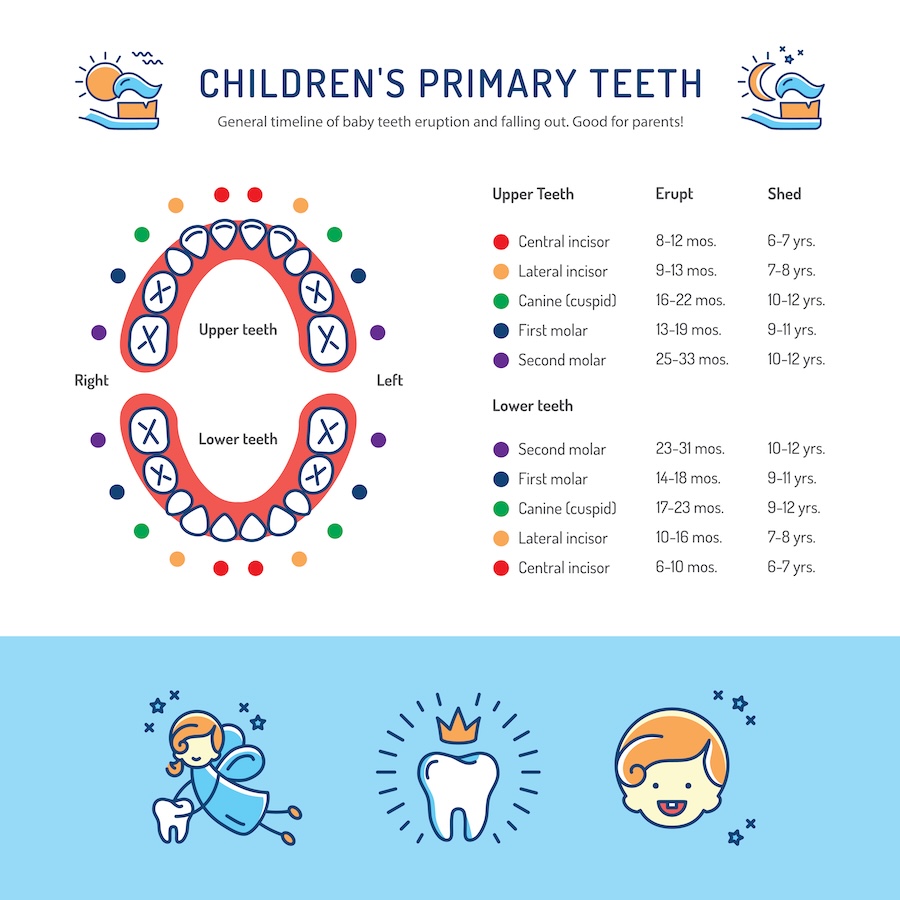
Once your baby arrives, the first set of visible teeth typically begins to erupt around 6 months of age, although this can happen a bit earlier or later. In some babies, you might see a tooth as early as 3 months, and others may not get their first tooth until after their first birthday — both fall within the range of normal.
This early stage is often memorable (or memorable for its discomfort). Some infants become fussier, drool more, or want to gnaw on objects as those first teeth push through.
Primary Teeth: The Full Baby Smile
By about 2 to 3 years old, most children have a full set of 20 primary teeth. These little teeth do a lot of heavy lifting: they help your child chew, speak clearly, and maintain space in the jaw for the future permanent teeth.
It’s normal for these teeth to come in at slightly different times for each child. What matters most is that they follow a general pattern and that there’s progress over time. If one tooth lags significantly without others nearby filling in, that might be something to mention at a dental visit, but most variations are just part of individual development.
Throughout early childhood, Dr. Murphy focuses on preventive care — checking for early signs of decay, offering guidance on brushing and diet, and watching how the bite develops.
The Transition Years: Losing Baby Teeth and Gaining Permanent Ones
Around age 6, the tooth trade begins. The first permanent molars typically come in behind the baby teeth (with no baby teeth falling out first), and the front incisors start to loosen and shed. We will place preventive dental sealants on permanent molars as they erupt to prevent decay.
This stage — often lasting until around age 12 or 13 — can feel unpredictable. One day a tooth is wiggly, the next it’s gone, and soon a bigger, permanent tooth takes its place. It’s not uncommon for teeth to come in crooked, spaced oddly, or in a different order than siblings or friends. As long as the general pattern is unfolding over months (not years), most of these variations are normal.
Dr. Murphy watches this transition closely so that if intervention is needed — such as space maintenance or early orthodontic guidance — it’s identified early and managed proactively.
Adolescence and Beyond: Wisdom Teeth and Final Settling
Once the second set of molars arrive — typically by age 12 or 13 — most of the adult bite is in place. But the story doesn’t end there. The third molars, commonly known as wisdom teeth, often start forming in the late teens or early 20s. Not all wisdom teeth erupt, but those that do can sometimes cause crowding, discomfort, or partial eruptions that trap food and bacteria.
Dr. Murphy and our team assess wisdom tooth development with careful imaging and discussion of your teen’s overall bite and oral health goals. In some cases, removal is recommended; in others, they remain harmlessly in place.
What’s Typical — and When to Ask Questions
Every child’s smile develops at its own pace, but there are some red flags worth discussing with your dentist. If you notice things like:
- Teeth that seem to be erupting very early or late compared with peers
- Persistent gaps or very crowded bite patterns as permanent teeth come in
- Pain, swelling, or infection around erupting teeth
- Baby teeth that don’t loosen on schedule
- Persistent thumb‑sucking or prolonged pacifier use that’s affecting alignment
…then it’s a good idea to schedule a visit. These concerns don’t always signal a problem, but they’re worth professional evaluation.
At Petite Smiles Pediatric Dentistry, Dr. Murphy and our team take a developmental approach to every smile. We don’t just look at where a child is now — we consider where they’re headed and how to support healthy growth.
Supporting Healthy Tooth Development at Petite Smiles Pediatric Dentistry
From the first tiny erupting incisor to the last molar, tooth development is a dynamic process with plenty of variation. Understanding the stages helps you know what’s typical and when to seek reassurance or guidance.
If you have questions about your child’s tooth development — or if you’d like to schedule a developmental evaluation and cleaning — call Petite Smiles Pediatric Dentistry in Oak Park, IL today. Our team is here to celebrate each milestone with you and ensure your child’s smile develops strong, healthy, and happy.
Categorised in: Baby Teeth, Dental Tips